
commercial-photography-packages-and-deliverables


Commercial photography packages are designed to give businesses clear, consistent visual assets that support brand and marketing goals. Each package groups planning, shooting, and editing so the final images reflect your brand's intent. Knowing what’s included, how pricing works, and how photographers collaborate with clients helps you pick the right option. This guide breaks down components, typical deliverables, pricing structures, and the client workflow so you know what to expect when hiring commercial photography services.
Beyond the obvious benefits of better imagery, a well-structured package reduces project risk: it clarifies responsibilities, sets timelines, and defines usage rights. For marketing teams, e-commerce managers, and creative directors, packages provide the repeatable outputs needed for campaigns, product launches, and ongoing content calendars. Understanding how studios translate briefs into deliverables helps you prepare a stronger brief and make the most of your budget.
Seeing how studios operate at a systems level helps explain the services and packages they offer.
Functions & Activities of Commercial Photography Firms
This thesis builds a model of common functions, activities, and records in commercial photography firms and traces how those roles developed historically. It highlights three central functions—attracting clients, sustaining the business, and carrying out photography assignments—and examines the routine activities and records that follow from those functions.
Commercial photography firms: their history, functions, and records, 1995
Most commercial photography packages bundle several core elements. Each plays a specific role in delivering polished images that meet your brief.
Recognizing these components makes it easier to compare packages and understand the value each stage contributes.
Pre-production often contains the most leverage for achieving on-brand results. Typical pre-production tasks include a discovery meeting, written creative brief, creation of a mood board or reference set, a shot list, location permits and logistics, props and styling coordination, and a timeline for the shooting day(s). When a photographer or studio invests time here, the shoot runs faster and delivers images closer to the brief on the first pass.
Shoot time varies by project scale. A product pack shot session for ten SKUs may be scheduled as a half-day in a controlled studio, while a multi-location lifestyle shoot could require several days. During the shoot the team manages lighting, composition, on-set styling, direction of talent or models, and any client approvals needed in real time. Many studios include a basic on-set client liaison or digital tech service to preview images and ensure technical consistency.
Post-production is where the raw files are shaped into final assets. Basic color correction and exposure adjustments are standard; higher-tier packages commonly include selective retouching, background removal, skin smoothing, object cleanup, and compositing. Clear definitions for how many edited images are included, and what constitutes an extra retouching hour or image, prevent misunderstandings.
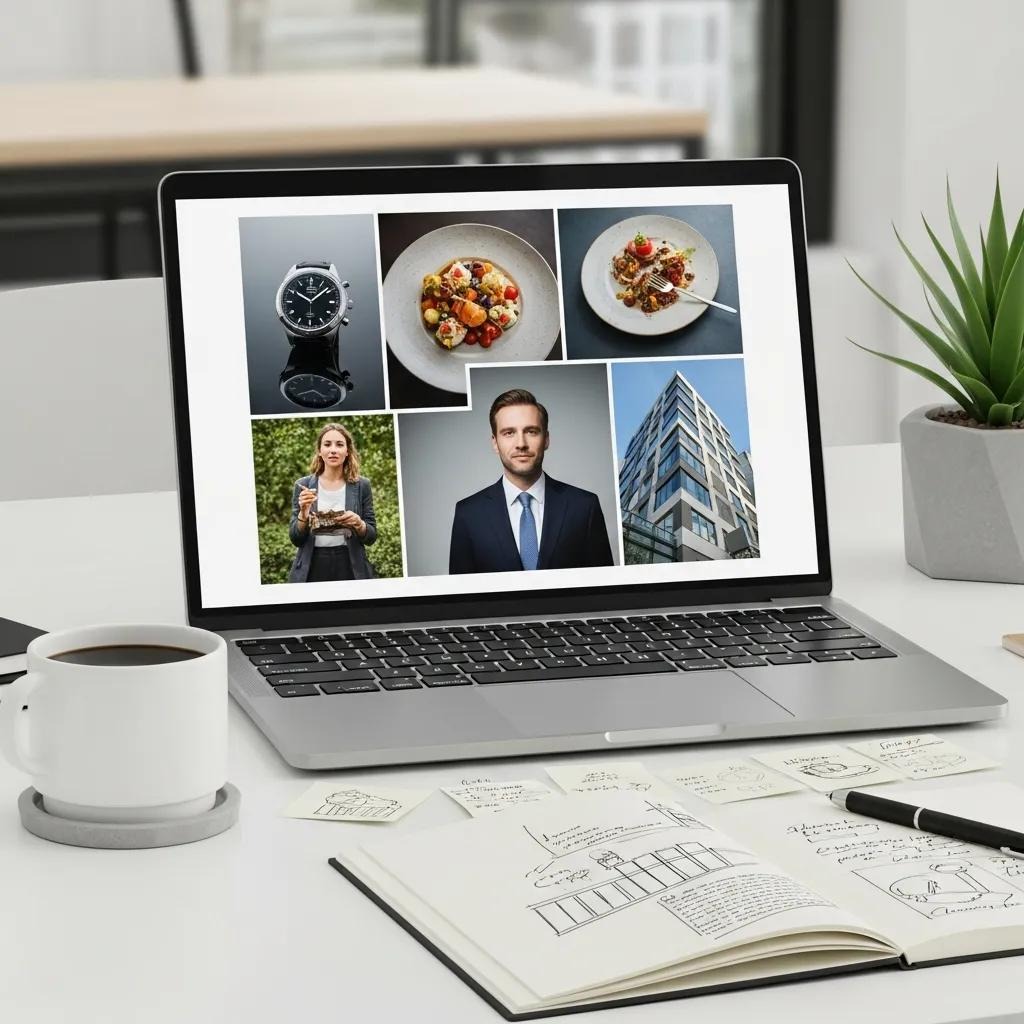
Deliverables are the tangible outputs you receive after a project. Clear deliverables and file formats help you use images confidently across print, web, and advertising channels.
Knowing exactly what’s included in your deliverables helps you plan campaigns and avoid unexpected limitations on use.
Deliverables commonly include multiple file variants per final image: a high-resolution TIFF or JPEG for print, an sRGB-encoded JPEG for web, and sometimes transparent PNGs for product shots. Studios may provide both color-profiled files (Adobe RGB or ProPhoto RGB) for print vendors and sRGB for online use; specify which you need. File naming conventions and folder structures (SKU-based, location-date, or shot-number) are useful for large projects and help your team ingest assets quickly.
Delivery methods vary: secure cloud links, downloadable ZIP archives, FTP, or digital asset management (DAM) upload. Ask how long files will be stored by the studio and whether long-term hosting or re-delivery is available for a fee. Good practice includes a short handover document that lists filenames, delivered formats, color profiles, and any usage restrictions spelled out in the license.
Legal and copyright issues around image use are increasingly important as commercial content moves across platforms.
Protecting Photography Copyright in E-commerce
As e-commerce grows, protecting photographers’ intellectual property becomes more complex. This article explores copyright infringement on online marketplaces and the challenges of intermediary liability, highlighting the tension between broad distribution and safeguarding creators’ rights.
Copyright Infringement of Photographs on E-commerce Platforms, A Pokrovskaya, 2025
Package pricing varies with scope, complexity, and intended usage. Below is a side-by-side comparison of the packages offered by AND Photography, showing transparent prices and the typical image counts included.
Package Type
Price
Image Count
Basic Photography Package
$1,200
20
Standard Photography Package
$2,500
50
Premium Photography Package
$4,000
100
This range gives clients options depending on budget and scale, from targeted campaigns to comprehensive brand shoots.
Pricing usually reflects several underlying costs: photographer and assistant time, equipment and studio rental, lighting and grip, scouting and permits, post-production hours, and licensing for image usage. Many studios present a base day rate and then itemize extras—travel, location fees, props, hair and makeup, or advanced retouching. Ask for a breakdown so you can evaluate trade-offs: for example, increasing the retouching allowance may be more cost-effective than booking additional shoot days.
Licensing terms are a major factor in price. A standard commercial license for a defined region and period will cost less than unrestricted global, perpetual rights or exclusive use. Clarify whether the quoted price includes a single-use, multi-use, time-limited, or perpetual license and whether rights revert or require renewal. If you plan to run national advertising or extended campaigns, request pricing for extended or exclusive rights up front.
Payment schedules commonly include a deposit to secure dates (often 20–50%), with the balance due on delivery or per a milestone schedule. Clear invoicing and payment milestones reduce the chance of delays. Also verify policies for cancellations, reschedules, and overtime during shoots so there are no surprises on the final invoice.
Research shows pricing often blends cost calculations with perceived value, reflecting skills, service quality, and brand positioning.
Commercial Photography Pricing Strategies & Value
This study examines pricing at a photography studio using interviews and documentation. Costs were calculated with a full-costing method and prices set with a cost-plus approach, but results indicate pricing that also factors in perceived value—skill, service, and professionalism—suggesting a hybrid of cost-based and value-based pricing strategies.
Analysis of Photography Service Pricing at Grabedito Studio in Palu City, S Sugianto, 2026

Collaboration is the backbone of a successful commercial shoot. A predictable process keeps projects on schedule and aligned with objectives.
Open communication at each stage reduces revisions and ensures the final images match your brand intent.
A practical workflow starts with a discovery meeting where stakeholders align on objectives, target channels, and KPIs. From that meeting the photographer typically prepares a written brief and a draft shot list. The shot list organizes images by priority (must-have, nice-to-have, extras) and includes technical notes such as aspect ratios, close-ups, and lifestyle versus product-only frames. Prioritizing shots helps the team adapt if time becomes constrained on the day.
During production, many clients prefer a short set of checkpoints: an on-set preview after key lighting setups, a mid-day review, and a final pre-wrap check to confirm all priority shots are captured. For remote stakeholders, studios can provide live image sharing or low-resolution proofs during the shoot for rapid feedback. After the shoot, a typical delivery cadence is initial proofs within a few days, followed by edited files within the agreed post-production window. Built-in rounds of revisions (for example, two re-edit rounds) should be documented in the contract so expectations are clear.
AND Photography provides focused services to cover a range of commercial needs, including:
These services can be combined or tailored to create a package that serves your specific project goals.
Interior and exterior photography works well for real estate listings, hospitality marketing, and facilities showcases. For interiors, the photographer will often control ambient and artificial light to reveal spatial depth and material textures while avoiding overexposure on windows. Exterior shoots frequently require planning for the best natural light window—golden hour or midday depending on the brief—and may need permits for equipment or drone use.
Drone imaging provides unique angles for site context, large property overviews, and dynamic marketing assets. If you plan to include aerial shots, coordinate early: pilots may need site permission, and flight windows can be constrained by weather and local regulations. Combining drone imagery with ground-based hero shots produces a more complete visual story for listings and brochures.
Videography services range from short promotional clips for social channels to longer brand films. Even short-form video benefits from an integrated approach: shooting select stills during the same production saves costs and preserves continuity in lighting and style. When you request both photo and video, clarify deliverables for both formats—file types, edit length, and any motion graphics or captions required.
Consider your budget, the purpose of the images (print, web, advertising), and the number of final assets you need. Review what each package includes—planning, shoot time, and post-production—and compare the photographer’s portfolio to ensure their style matches your brand. Clear goals will help you select the most appropriate package.
Also think about how images will be used over time. If you plan recurring campaigns or seasonal updates, a retainer or modular package that includes scheduled shoots may be more cost-effective than ad-hoc bookings. Ask about turnaround times, licensing scope, and whether the package covers re-shoots or additional editing beyond the included rounds.
Provide a concise brief with objectives, visual references, and any mandatory elements. Agree on milestones and check-ins, and be open to the photographer’s suggestions—their expertise will often improve the final result. Confirm communication preferences and response windows up front.
Use a shared document or project board to centralize references, the shot list, and schedule. Attach brand assets such as logos, font files, and color palettes if the images will be integrated into designed materials. When giving feedback on proofs, be specific: indicate which image, which element (color, crop, retouch), and the desired change to speed the revision process.
Turnaround depends on shoot complexity and current workload, but typical delivery is between one and four weeks after the shoot. Extensive retouching or larger projects can add time—discuss expected timelines during the quotation stage to set clear expectations.
Turnaround can also be staged: a fast-proofs delivery (low-res JPEGs within 48–72 hours) followed by fully edited high-resolution files. If you need rush delivery, request it at the time of booking; rush fees or priority scheduling are common and should be documented in the quote.
Potential extras include travel, location fees, permits, equipment rentals, and added services like drone work or video. Ask for a detailed quote that lists possible additional charges so you can budget accurately.
Other possible costs include model or talent fees, stylists, set construction, insurance for special equipment or locations, and extended licensing for major ad buys. If the project spans multiple days, ask whether rates change for overtime or weekend work, and clarify who is responsible for catering, craft services, and on-site expenses.
You usually receive a licensing agreement that spells out permitted uses—web, print, duration, and territory. Read the license carefully to ensure it covers your intended use and discuss extended or exclusive rights if needed.
Licenses can be tailored to campaigns (single-campaign, multi-campaign), media (digital-only, print-only, or both), territory (local, national, global), and time (one year, multi-year, perpetual). If you anticipate broad syndication or resale of products that include the images, negotiate those terms before the shoot to avoid retroactive fees.
Absolutely. Share visual references, color palettes, and thematic notes in your brief. The more specific your references, the easier it is for the photographer to match your vision and deliver on-brand images.
Include examples that highlight composition, mood, and lighting rather than only subject matter. If you have strict brand guidelines, provide them early. When possible, schedule a short creative call to walk through references and align interpretations so both sides understand the desired outcome.
First, communicate specific concerns with the photographer—what feels off, which images, and why. Most photographers include a revision process or re-edit rounds to address reasonable feedback. Prompt and clear feedback helps reach a resolution efficiently.
If concerns remain after revisions, review the contract's dispute or remediation clauses. Many studios will offer additional edits or, in some cases, partial refunds if deliverables clearly fall short of the agreed scope. The best outcomes come from clear documentation of expectations and timely feedback during the revision rounds.